
Pane di Pasqua (Authentic Italian Easter Bread)

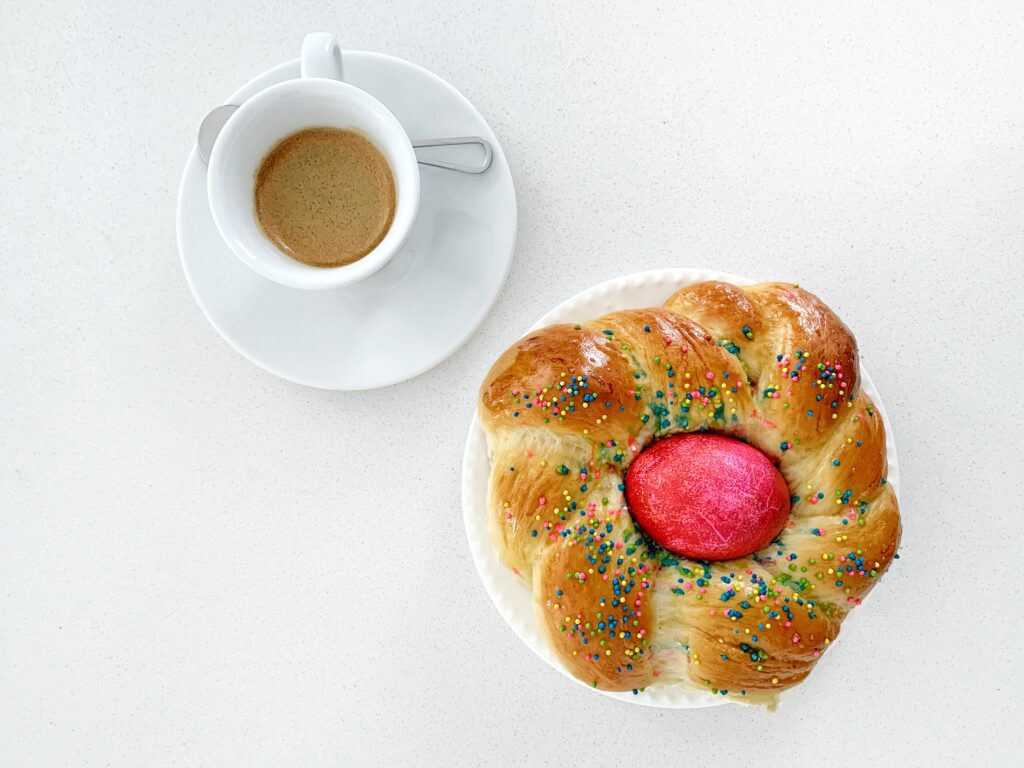
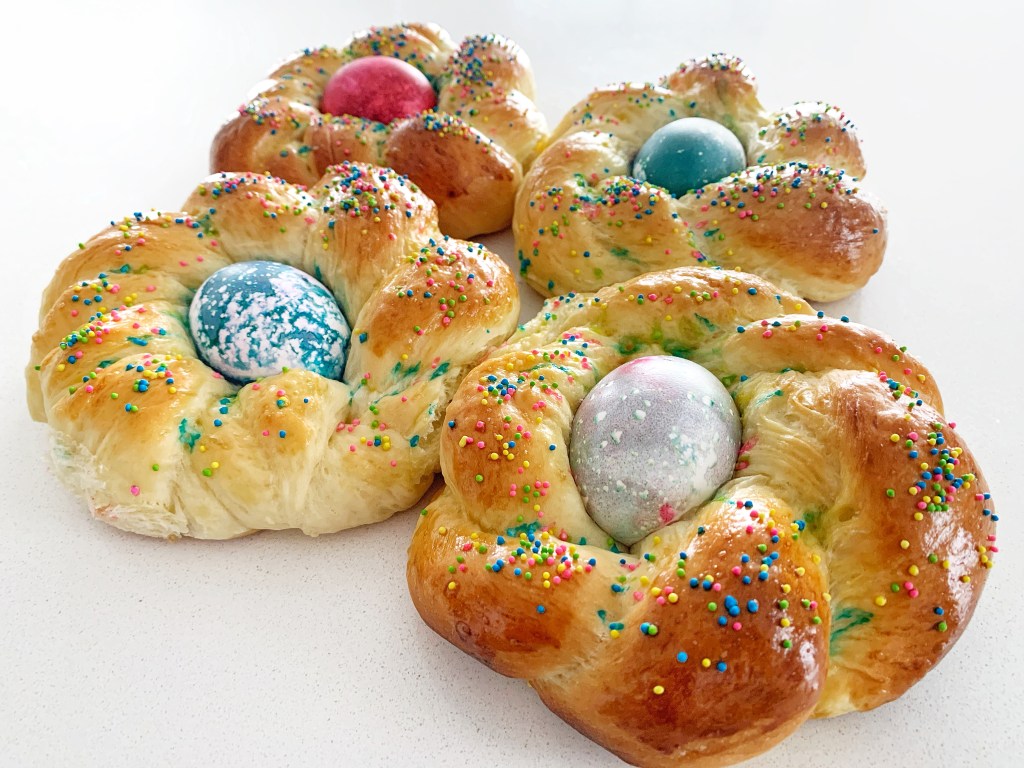
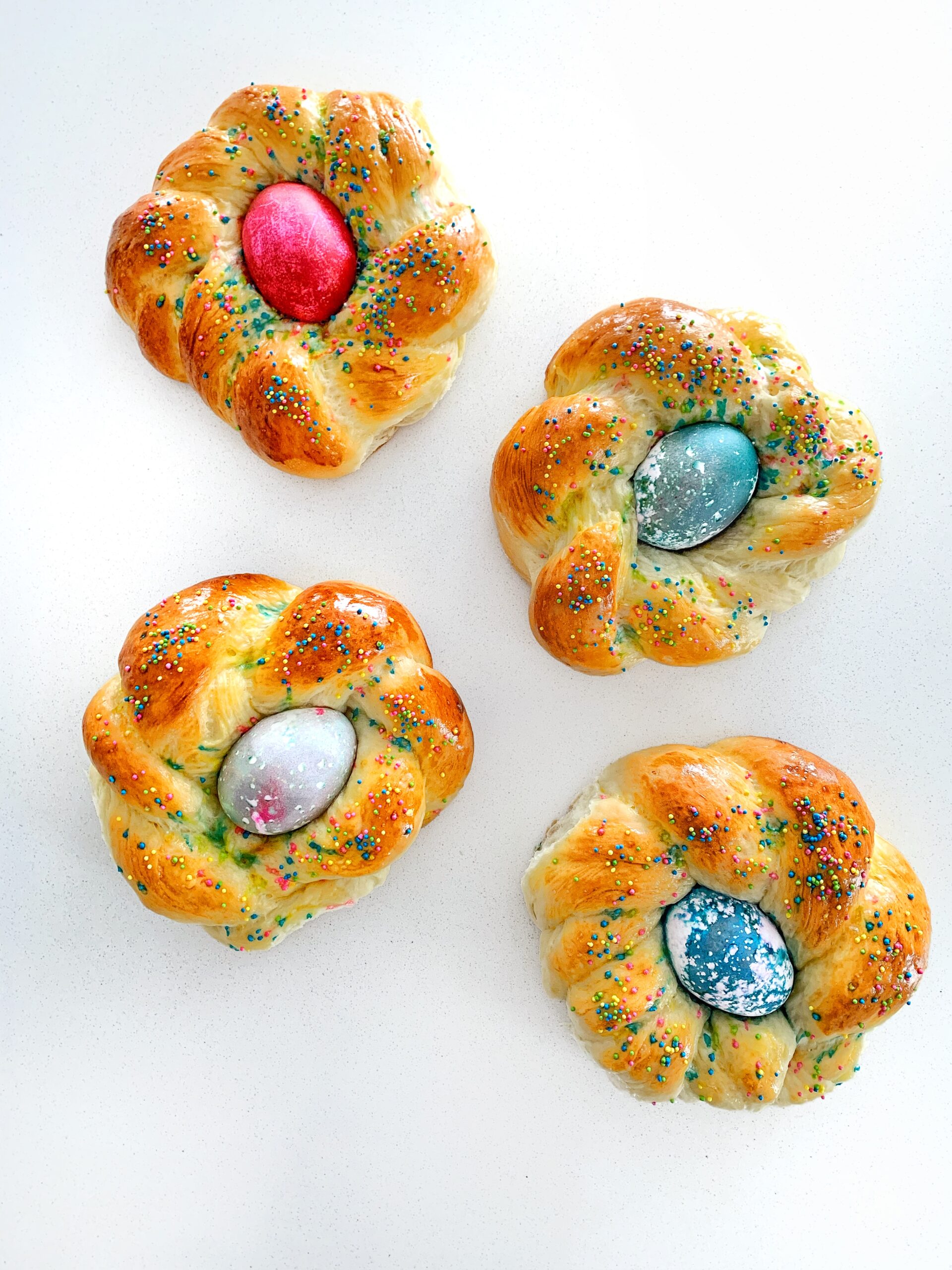
Pane di Pasqua is a traditional Italian Easter bread, lightly sweet, enriched with eggs, and often decorated with colorful eggs baked directly into the dough. This authentic pane di pasqua recipe is commonly enjoyed for Easter breakfast or brunch and symbolizes rebirth and celebration across many Italian regions.
With Easter around the corner, I wanted to make this fun and colorful authentic Italian Easter bread. It’s enjoyed around this time of year and is slightly sweet and dense. It’s like brioche or challah bread. It’s fantastic in the morning with a coffee or simply as a dessert. Growing up, we would always see this bread at my Nonna’s house, which also beautifully decorates the table. It will leave your home smelling so good! Let’s get cookin’!
What Is Pane di Pasqua?
Pane di Pasqua is a traditional Italian Easter bread made to celebrate Easter Sunday. While variations exist across Italy, it is typically a soft, slightly sweet bread enriched with eggs and shaped into rings or braids. Decorated with sprinkles and baked eggs, pane di pasqua is often served for Easter breakfast or alongside coffee after church.
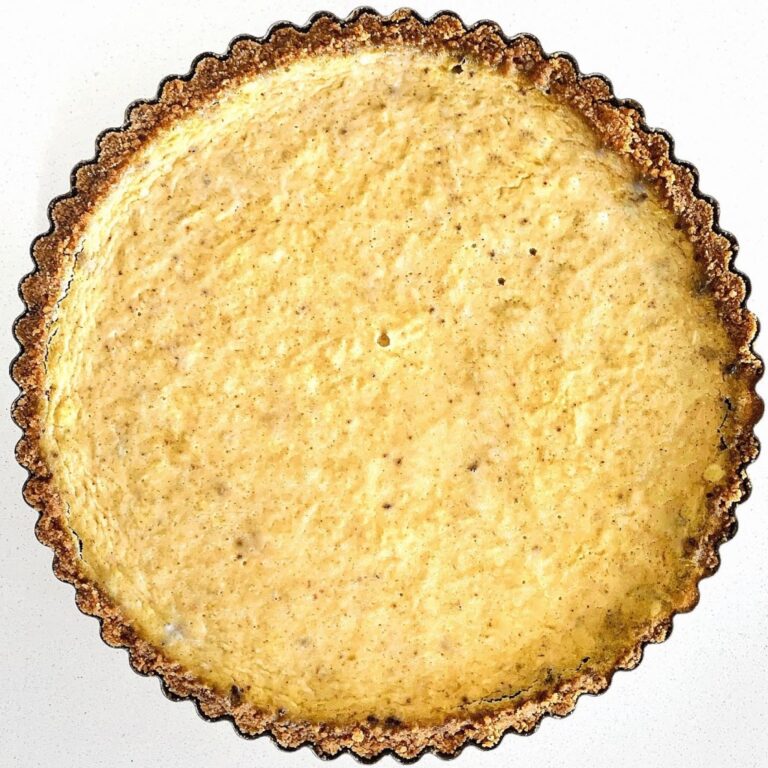
It’s one of many traditional holiday baking recipes enjoyed throughout Italy. If you enjoy classic Italian sweets, you may also like this torta caprese.
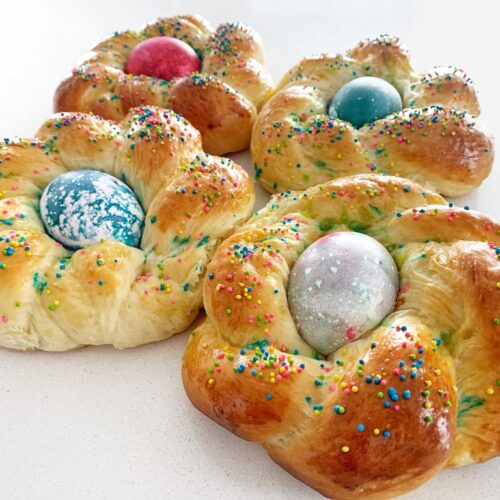
Pane di Pasqua (Italian Easter Bread)
Equipment
- 1 stand mixer dough hook attachment
Ingredients
- 2 1/4 tsp dry yeast one packet
- 1 1/4 cups lukewarm milk (not hot)
- 1/3 cup butter, softened
- 3 egg 1 for egg wash
- 1/2 cup sugar
- 3 1/2 cups all purpose flour
- pinch salt
- 6 dyed Easter eggs (hard boil them before dying)
- colorfour sprinkles
Instructions
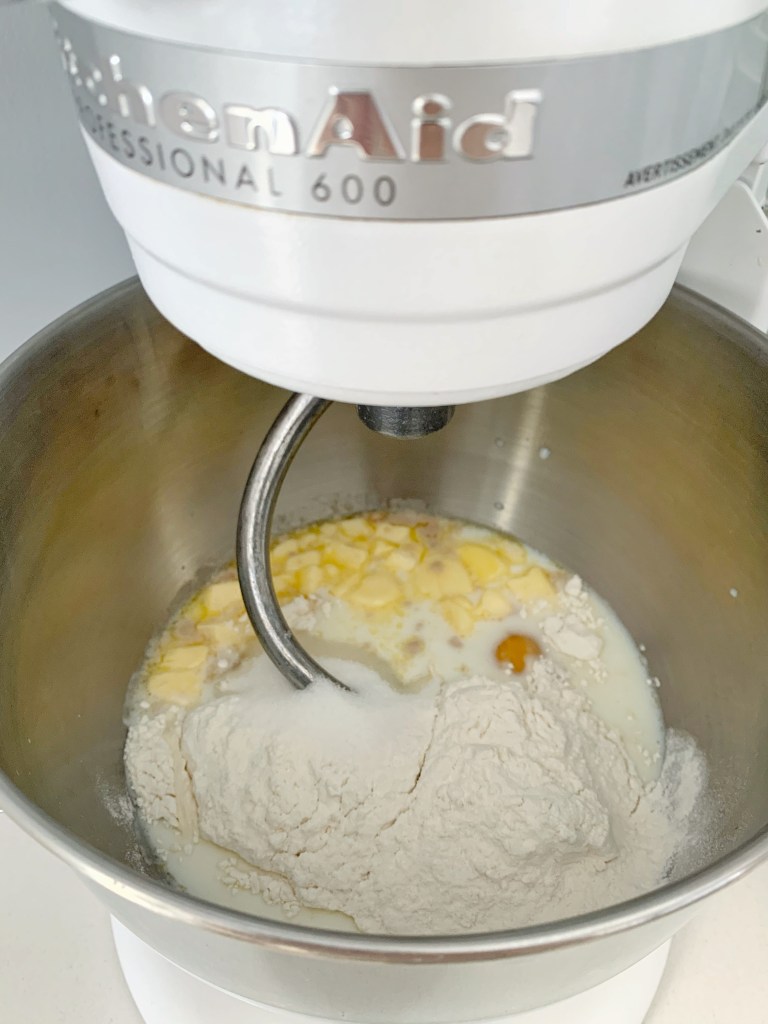
- In a stand mixer bowl with the dough hook attachment, combine yeast, warm milk, salt, butter, 2 eggs, sugar and about half of the flour.⠀
- Turn the mixer on medium-low speed and slowly add the remaining flour and beat until well combined, occasionally scraping the sides of the bowl down. Sprinkle flour if too wet.⠀
- When dough is well combined and starts forming a ball, transfer to a floured surface and knead by hand for a few min until it’s smooth and no longer sticky. Sprinkle flour over dough if too sticky.⠀
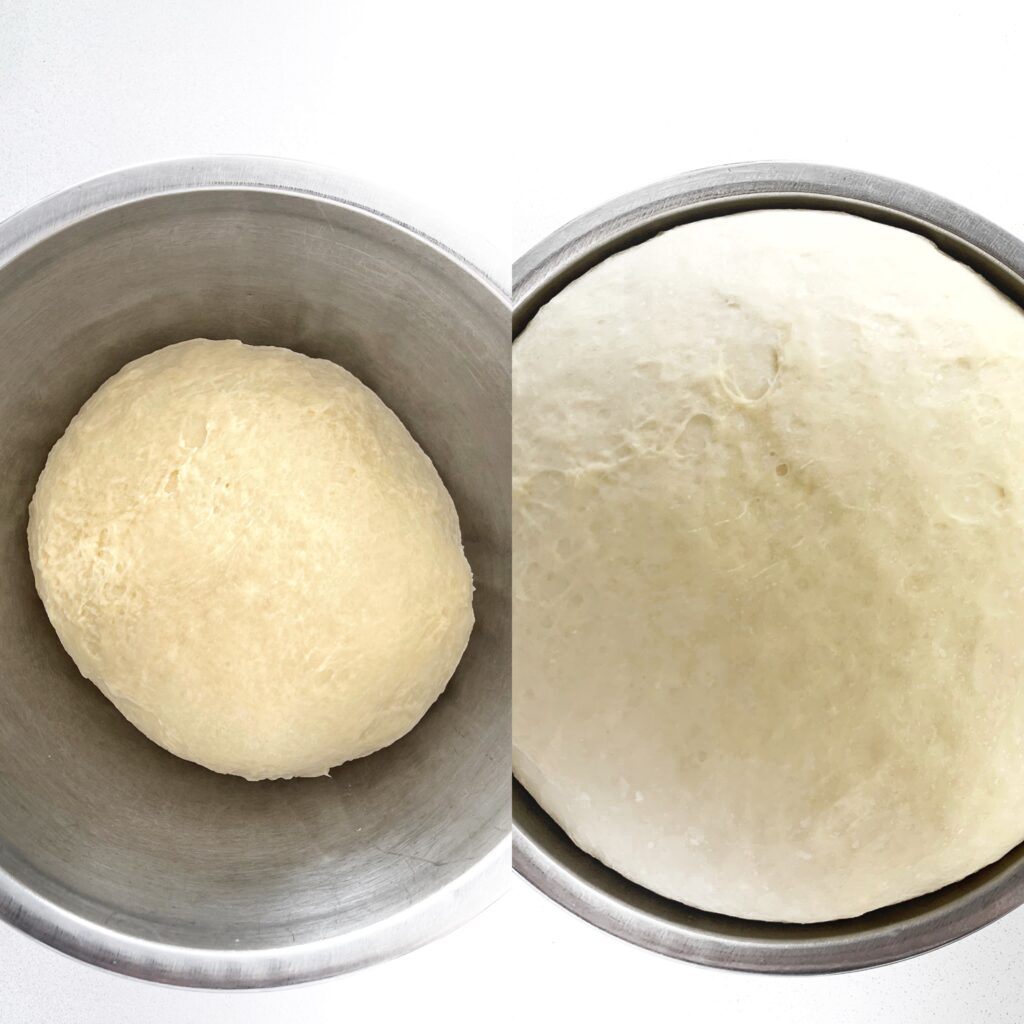
- Form a ball with the dough and place in a greased bowl, cover and let rise in a warm place or in the oven with the proof setting on until doubled, about 1-1.5 hours.⠀
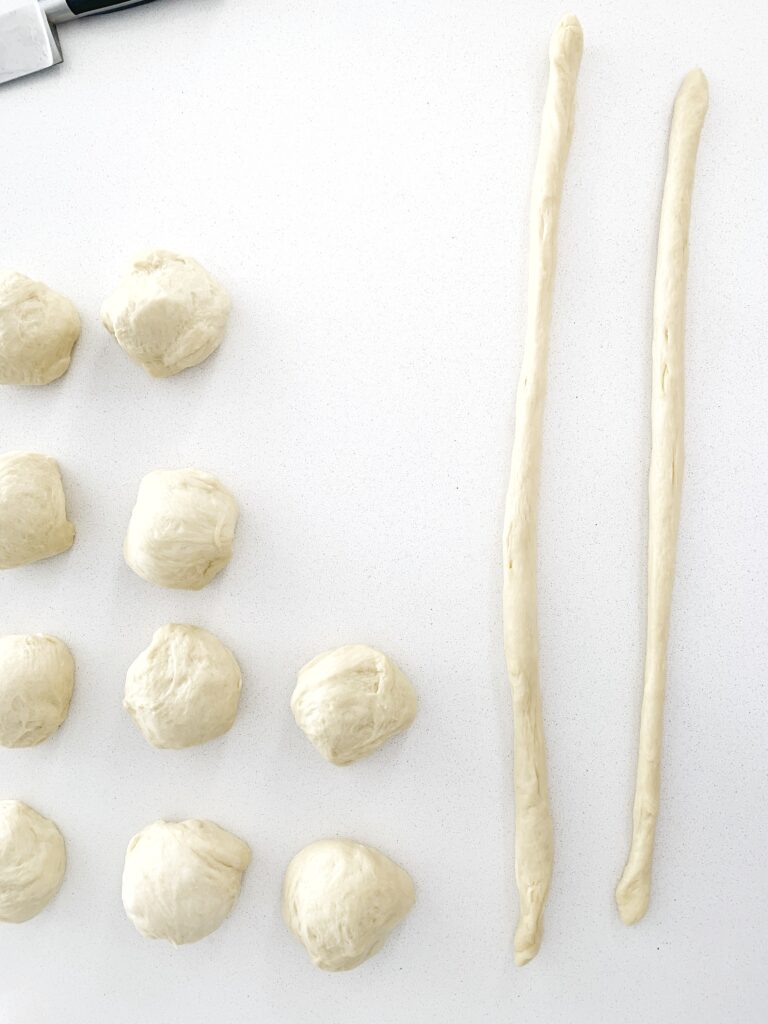
- When doubled in size, punch dough down, and divide into 12 pieces.⠀
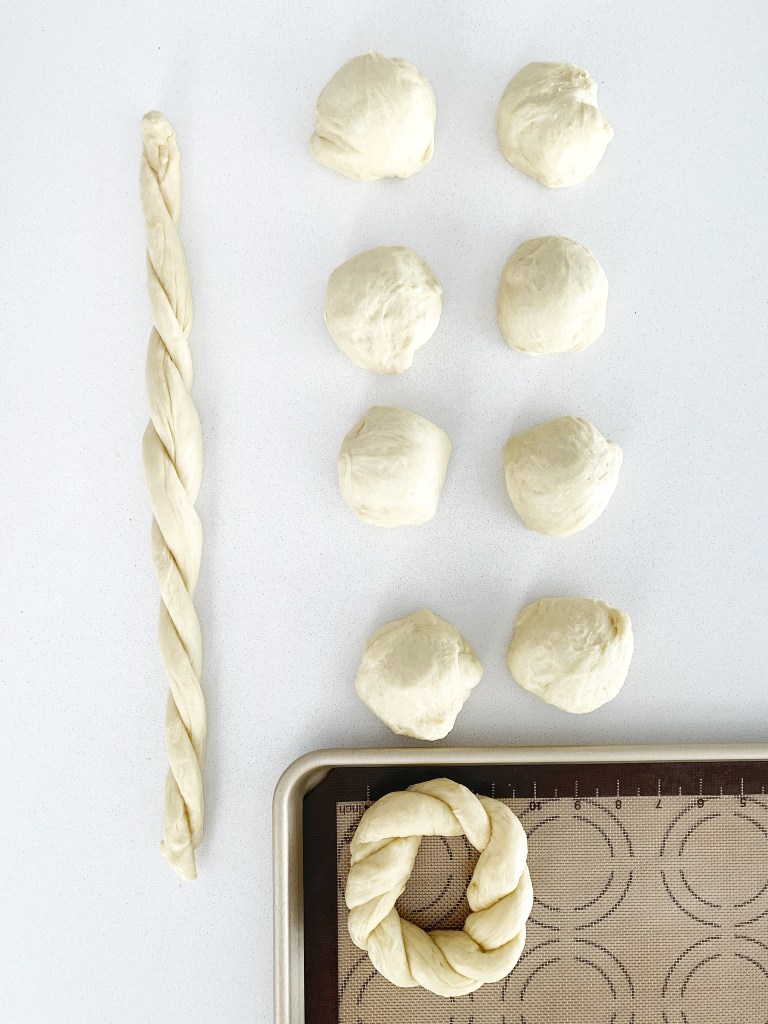
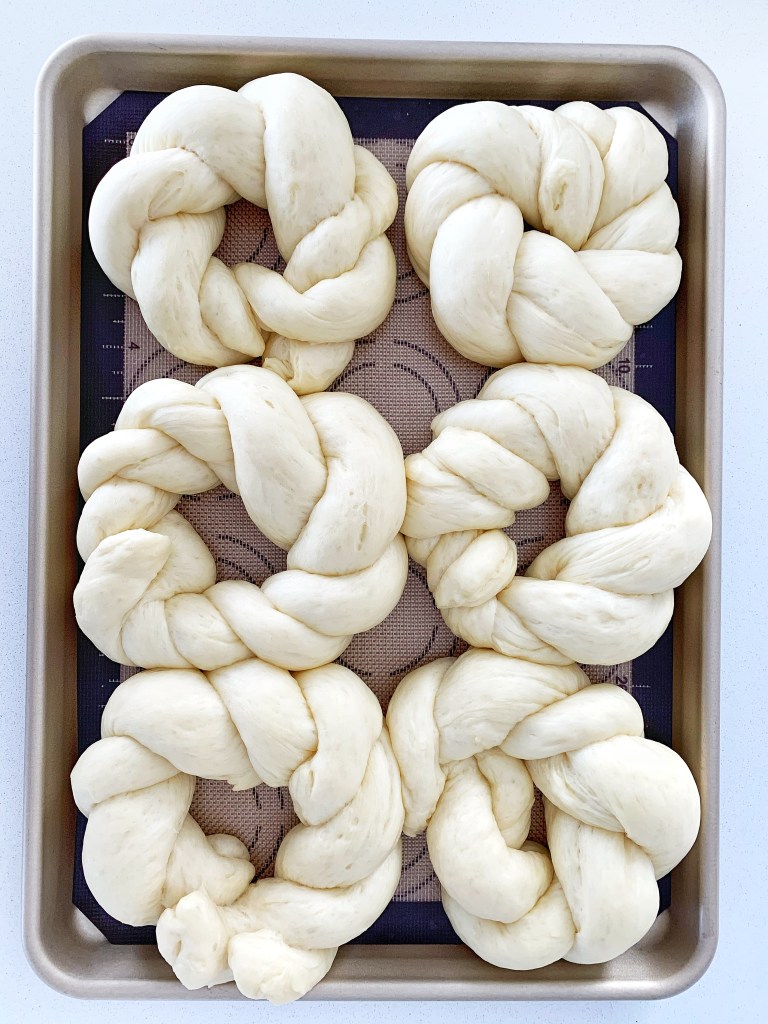
- Roll each piece to form a snake 🐍 of about 14” long and, taking two pieces, twist them together, pinch the ends and loop them into a circle. Repeat until you have 6 round loafs.⠀
- Place on lined baking sheet and let them rise for another hour in the oven on proof mode until they have doubled in size.⠀
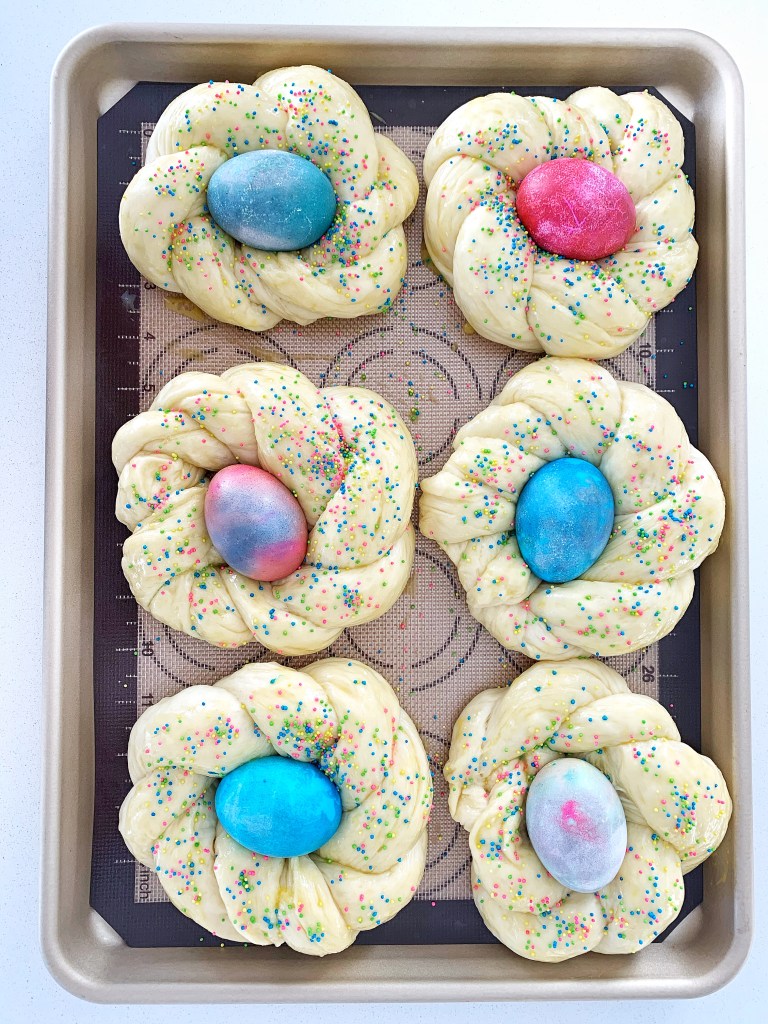
- Brush each bread with beaten egg wash and sprinkle each bread with colourful funfetti sprinkles. In the middle of each bread, gently place an Easter egg.⠀
- Bake at 350F until golden for 20-25 minutes. Let them cool on a rack and enjoy 💜💛💚⠀
What is pane di pasqua?
Pane di Pasqua is a traditional Italian Easter bread made with eggs and lightly sweet dough, often decorated with sprinkles and baked eggs.
Is pane di pasqua the same as Italian Easter bread?
Yes. Pane di Pasqua is the Italian name for Italian Easter bread, with many regional variations across Italy.
When is pane di pasqua eaten?
Pane di Pasqua is traditionally eaten on Easter Sunday, often for breakfast or brunch.
What a fantastic recipe! Easy to follow and delicious. Thank you so much!